
Spaced Repetition Technique: How It Works & How to Use It
Forgetting follows a predictable curve—unless review arrives at the right moment. The spaced repetition technique replaces cramming with reviews at expanding intervals, right when recall starts to fade. This guide explains how spacing and active recall work together, compares manual schedules with popular algorithms, and shows how to apply the same approach to facts, reading highlights, and existing notes.
What is the spaced repetition technique?
The spaced repetition technique, also called distributed practice, means reviewing information at intervals that get longer over time instead of cramming everything into one session. A learner might review material soon after first encountering it, then again days later, followed by reviews weeks or months apart.
In short: spaced repetition strengthens memory by separating reviews and combining them with active recall.
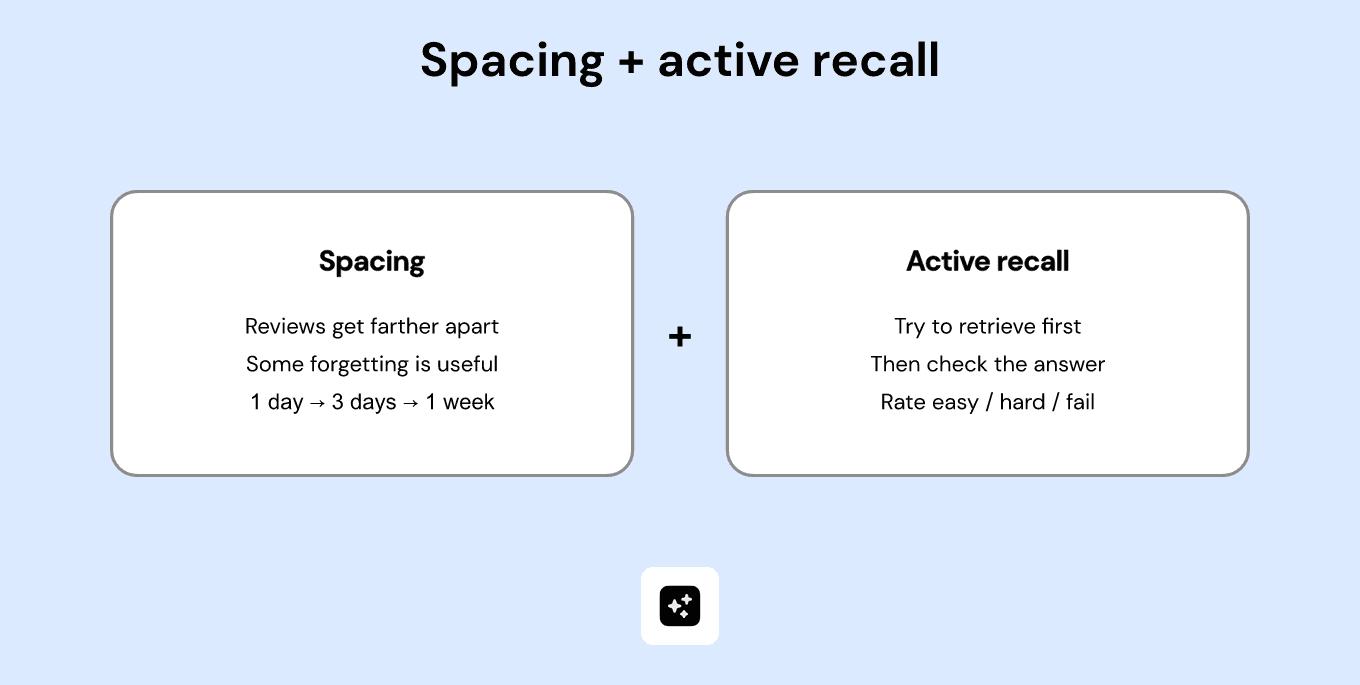
Two ingredients make the technique work:
- Spacing reviews apart: Allowing some forgetting to occur makes recall more effortful and can strengthen later retention.
- Active recall instead of rereading: Testing memory before checking the answer creates stronger practice than passively scanning the same material again.
A simple plan might look like this: learn something today, review it tomorrow, revisit it a few days later, and check it again the following week. If recall is easy, the next interval can expand. If recall fails, the item needs another review sooner.
Spaced repetition is best known for languages, professional exams, and factual knowledge. The same basic idea can also resurface personal notes, helping important ideas return to attention instead of remaining buried in a digital archive.
Why the spaced repetition technique works
The spaced repetition technique works with the way memory changes over time. Ebbinghaus’s 1885 work popularized the classic forgetting curve: memory tends to drop sharply after learning and then level out. Classic popularizations often cite recall of about 40% after 20 minutes, 25% after a day, and 20% after a month, although exact percentages vary.
Murre and Dros (2015) replicated Ebbinghaus’s original forgetting-curve experiment. Their work supports the general pattern of rapid early forgetting followed by a slower decline, rather than proving one fixed curve for every kind of meaningful learning.
The spacing effect
A large laboratory study by Cepeda et al. (2008) found absolute gains of roughly 10–50% for spaced practice compared with massed practice. The best delay between reviews depended on how long the memory needed to last: memories intended to survive longer benefited from longer lags between study sessions.
People can also misjudge which method works best. In Kornell’s 2009 study, about 90% of participants recalled more from spaced stacks even though massed practice felt more effective while they were studying.
When total study time is matched, laboratory research often finds expanding intervals perform about as well as equal spacing. Software still commonly uses expanding intervals because extra early reviews can reduce failures while a memory is weakest.
The testing effect and active recall
Active recall is the other half of effective spaced repetition. Instead of rereading a fact, a learner tries to produce it from memory and then checks the answer.
Roediger and Karpicke (2006) showed why this matters. After five minutes, restudying produced 81% recall compared with 75% after testing. After two days, testing led to 56% recall versus 42% for restudying. After one week, testing produced 61% recall compared with 40% for restudying.
Karpicke and Roediger (2008) found that once an item could be recalled, additional testing supported later retention better than additional restudy. Dropping an item after its first successful recall reduced later performance.
Why spacing and testing reinforce memory
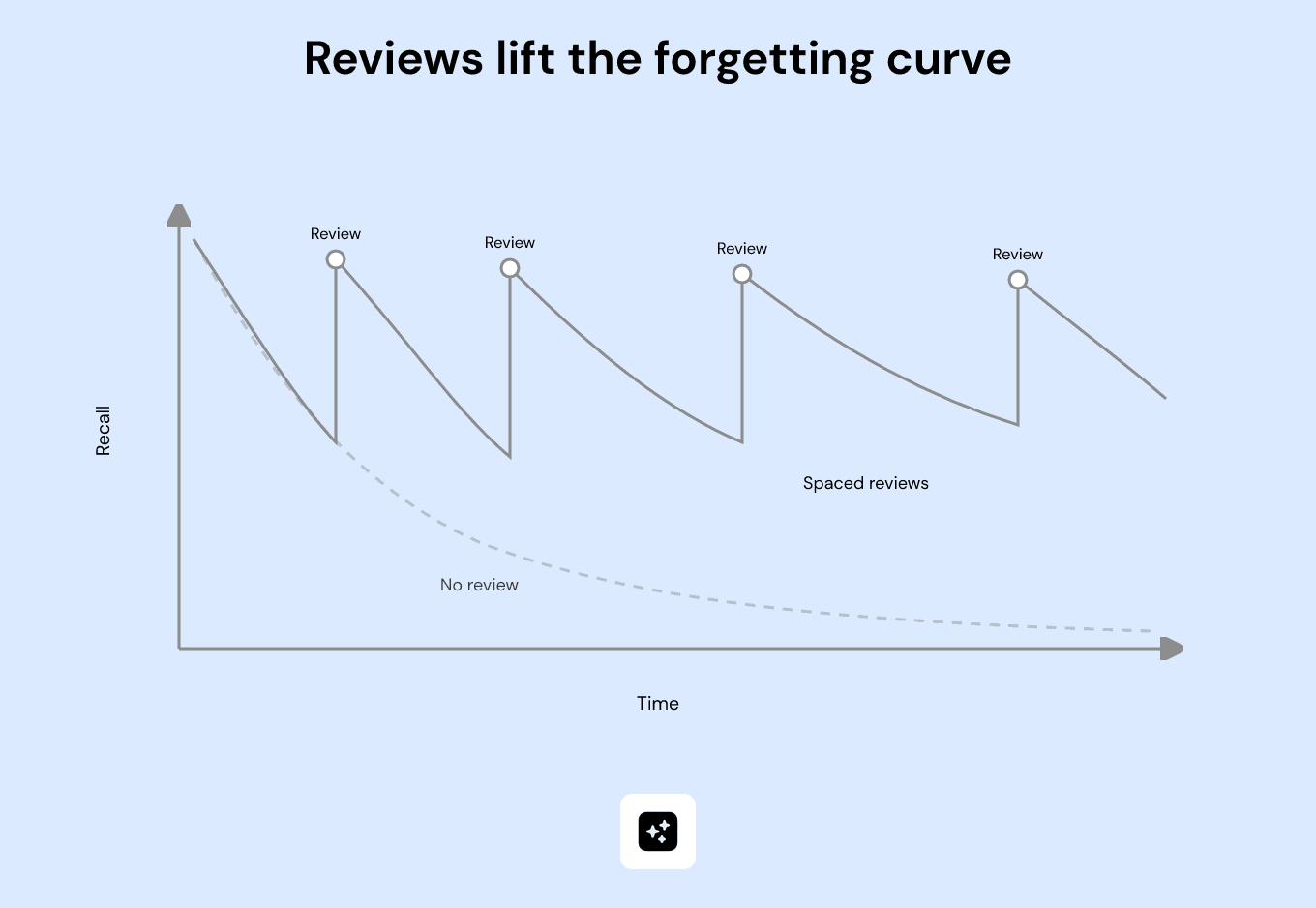
Several mechanisms may contribute to the effect:
- Desirable difficulties: Effortful retrieval can improve durable retention, especially when some forgetting has occurred.
- Encoding variability: Reviews in different contexts create more varied cues for remembering.
- Study-phase retrieval: Each review reactivates earlier learning and adds another retrieval opportunity.
- Consolidation: Time between sessions, including sleep, gives memory an opportunity to stabilize.
No single neural explanation is necessary to use the technique. Spacing adds a useful challenge, while retrieval strengthens access to the information.
Caveat: Spaced repetition helps delayed tests and long-term learning more than a last-minute cram. If the first interval is too long, a learner may fail to recall anything. A real question followed by feedback is also stronger than rereading on a calendar. Intervals should reflect the material’s difficulty, the learner’s prior knowledge, and how long the information needs to last.
Spaced repetition schedules and algorithms
A schedule determines when an item returns for review. A manual calendar can be enough for a small collection, while an algorithm becomes more useful when a learner manages a large deck with different levels of difficulty.
Manual calendars
Manual schedules are easy to understand and require no special software.
- 2-3-5-7 method: Review after 2, 3, 5, and 7 days. Some versions refer to days after learning, while others use specific calendar dates. It is a simple spaced plan, not an adaptive algorithm.
- Generic expanding intervals: Start with a short review, such as after one day, then widen the gaps to several days, a week, two weeks, and a month. If an item is forgotten, bring it back sooner.
- Equal spacing: Review items on a fixed rhythm, such as every three days. When total study time is matched, expanding and equal spacing can produce similar results in laboratory settings. Expanding schedules remain popular in software because early reviews can prevent failures.
- 3-2-1 memory technique: This usually refers to classroom reflection—three takeaways, two questions, and one connection—or to an exam countdown, such as reviews three, two, and one days before the test. It can create a simple spaced plan, but it does not adapt to individual items.
Algorithms
Algorithms change an item’s interval based on recall performance.
Leitner system
In the Leitner system, items begin in Box 1. A correct answer promotes an item to the next box, while a failed answer returns it to Box 1. Box 1 is typically reviewed daily, with higher boxes reviewed less often.
The system adapts to pass or fail, not to graded difficulty. It works well with physical cards and remains easy to understand, but it cannot distinguish between an item recalled with great effort and one recalled instantly.
SM-2
SM-2, or SuperMemo 2, asks the learner to rate recall quality from 0 to 5. Its original interval rules begin with:
- I(1) = 1 day
- I(2) = 6 days
- I(n) = I(n−1) × EF for later intervals
The ease factor, or EF, starts at 2.5 and has a floor of 1.3. A quality score below 3 resets the item. Anki historically used a modified version of SM-2.
SM-2 can be efficient, but low early scores may create “ease hell,” where cards remain stuck on short intervals even after they become easier.
FSRS
FSRS, or Free Spaced Repetition Scheduler, models three concepts for each item:
- Stability: How long the memory is expected to last.
- Difficulty: How challenging the item is for the learner.
- Retrievability: The predicted chance of recalling it at a given moment.
The scheduler aims to review an item when predicted retrievability reaches the desired retention level, often around 90%. FSRS is native in Anki 23.10 and later. Its personal optimizer becomes more useful after substantial review history, around 1,000 or more reviews.
RemNote reports that FSRS can require roughly 20–30% fewer reviews than SM-2 at matched retention. Setting desired retention above about 97% can cause workload to increase dramatically.
Comparison table: manual calendars vs algorithms
| Method | Best for | Adapts to you? | Main tradeoff |
|---|---|---|---|
| 2-3-5-7 | Simple hand-tuned review rhythm | No | Easy to use; ignores item difficulty and can over- or under-review |
| Leitner | Visual or physical card management | Pass/fail only | Intuitive; cannot distinguish graded difficulty |
| SM-2 | Fact-rich decks and basic personalization | Partial | Efficient; some cards may get stuck in “ease hell” |
| FSRS | Digital review with substantial history | Yes, after data | Can reduce reviews; requires app support and review history |
How to use spaced repetition
The spaced repetition technique becomes practical when learning material is converted into small prompts and reviewed consistently. A knowledge worker, student, or note-taker can use the following process:
- Break content into testable units. Convert chapters, lectures, or notes into clear questions, cloze deletions, or discrete problems. Small units are easier to retrieve and schedule.
- Hide the answer. Try to recall the answer before checking it. Then rate the attempt honestly: easy, difficult, or unsuccessful.
- Limit new items. Adding hundreds of cards at once creates an unmanageable review backlog. A small, steady stream is easier to maintain.
- Use a scheduler. Physical cards can follow the Leitner system. Digital tools include Anki, SuperMemo, RemNote, Mnemosyne, and Quizlet learn modes. Anki is free and supports SM-2 and FSRS, though its interface has a steep learning curve. SuperMemo originated SM-2. Readwise resurfaces reading highlights and can include optional prompts, but the main activity is still passive rereading.
- Match the format to the material. Facts benefit from questions with hidden answers. Personal notes may work better as scheduled resurfacing with a guiding question rather than a fully atomized flashcard deck.
Choosing the right scheduler can make spaced repetition easier to sustain. Compare the strengths of popular tools in this guide to the best spaced repetition apps before building your review system.
Benefits of using spaced repetition
- Longer retention with less cramming: Reviews support memories that need to last beyond the next test.
- Less wasted rereading: Retrieval reveals what is actually available from memory.
- Better calibration: Honest recall shows which items are strong, weak, or misunderstood.
- Support for varied material: Vocabulary, formulas, procedures, workflows, and troubleshooting steps can all become review prompts.
- Longer intervals over time: Successfully recalled items can return less often.
- Manageable review sessions: A steady stream of small reviews is easier to fit around work or school.
- A bridge from facts to notes: The same review habit can bring important personal ideas back into working memory.
Messy personal notes need a slightly different approach: rather than turning every paragraph into a card, a resurfacing system can return useful notes with optional prompts.
Beyond flashcards: spaced repetition for personal knowledge
Flashcards are effective for atomic facts, but knowledge workers face a broader problem. The Knowledge Worker’s Paradox is that the more notes someone creates in Notion or Obsidian, the less likely each note is to be encountered again. Capture tools make it easy to store ideas, but storage does not guarantee resurfacing.
This gap can be described as Personal Knowledge Reinforcement. Instead of repeatedly testing facts created by a textbook, the system revisits notes, summaries, meeting takeaways, and insights that someone has already written. The goal is a living knowledge base in which older ideas can be refreshed, connected to current work, and updated when they no longer fit.
Daily Brain Bits is designed for this job. It connects with Notion and Obsidian, lets someone choose the email frequency and number of notes per send, and resurfaces notes already stored in the workspace. Its optional AI feature can generate multiple-choice quizzes that hide one to three concepts, such as dates, names, or key ideas. Users can prioritize or deprioritize notes and receive suggestions for new links. The Pro plan, around $10, is intended for AI features and additional customization; the exact mix is still being defined.
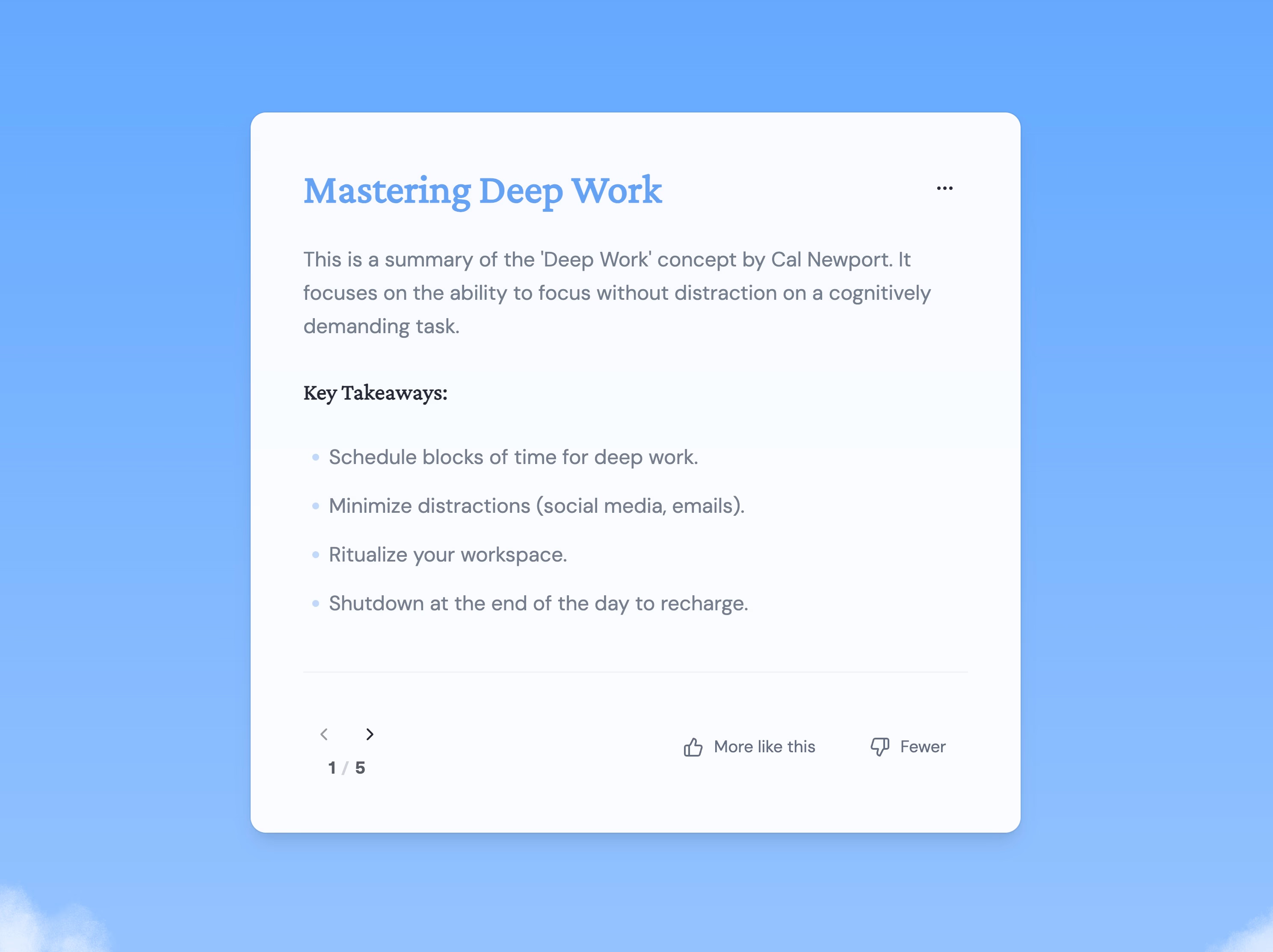
These “cards” are notes already stored in the vault.
The 4 Rs of personal knowledge reinforcement
- Resurface — old notes return to working memory on a schedule.
- Reconnect — notes appearing alongside current work can suggest new links or ideas.
- Refresh — outdated thinking can be revisited and edited instead of becoming stale.
- Remix — fragments can combine into new insights, writing, or decisions.
Different tools serve different jobs:
| Job | Typical tool | What gets scheduled | How recall works |
|---|---|---|---|
| Facts, languages, and exam study | Anki, SuperMemo, RemNote | User-authored cards | Active grading with Again, Hard, Good, or Easy |
| Reading highlights from books and articles | Readwise, Matter, Kindle | Clipped highlights and quotes | Passive rereading plus optional prompts |
| Existing Notion or Obsidian notes | Daily Brain Bits | Pages and notes already written | Email resurfacing plus optional multiple-choice quizzes |
These three jobs are complementary. Daily Brain Bits does not replace a medical-school Anki deck or Readwise for ebook highlights. It addresses the neglected middle: personal notes that already exist but rarely return to attention.
How to get started with spaced repetition today
A tool-agnostic starting plan can stay simple:
- Pick one job. Choose facts, reading highlights, or existing notes.
- Start with about 10 items. A small set is easier to review consistently than an entire archive.
- Match the recall style. Use hidden-answer questions for facts. For notes, add a guiding question or ask what the note changes about current work.
- Review when prompted. Mark failures honestly and avoid saving every review for one large session.
- Sort after a week. Keep items that deserve continued review, convert some into notes or cards, and remove material that no longer matters.
If the job is reviewing existing Notion notes
Daily Brain Bits can set up scheduled resurfacing for personal notes in Notion:
- Create a Daily Brain Bits account.
- Choose Notion as the note source.
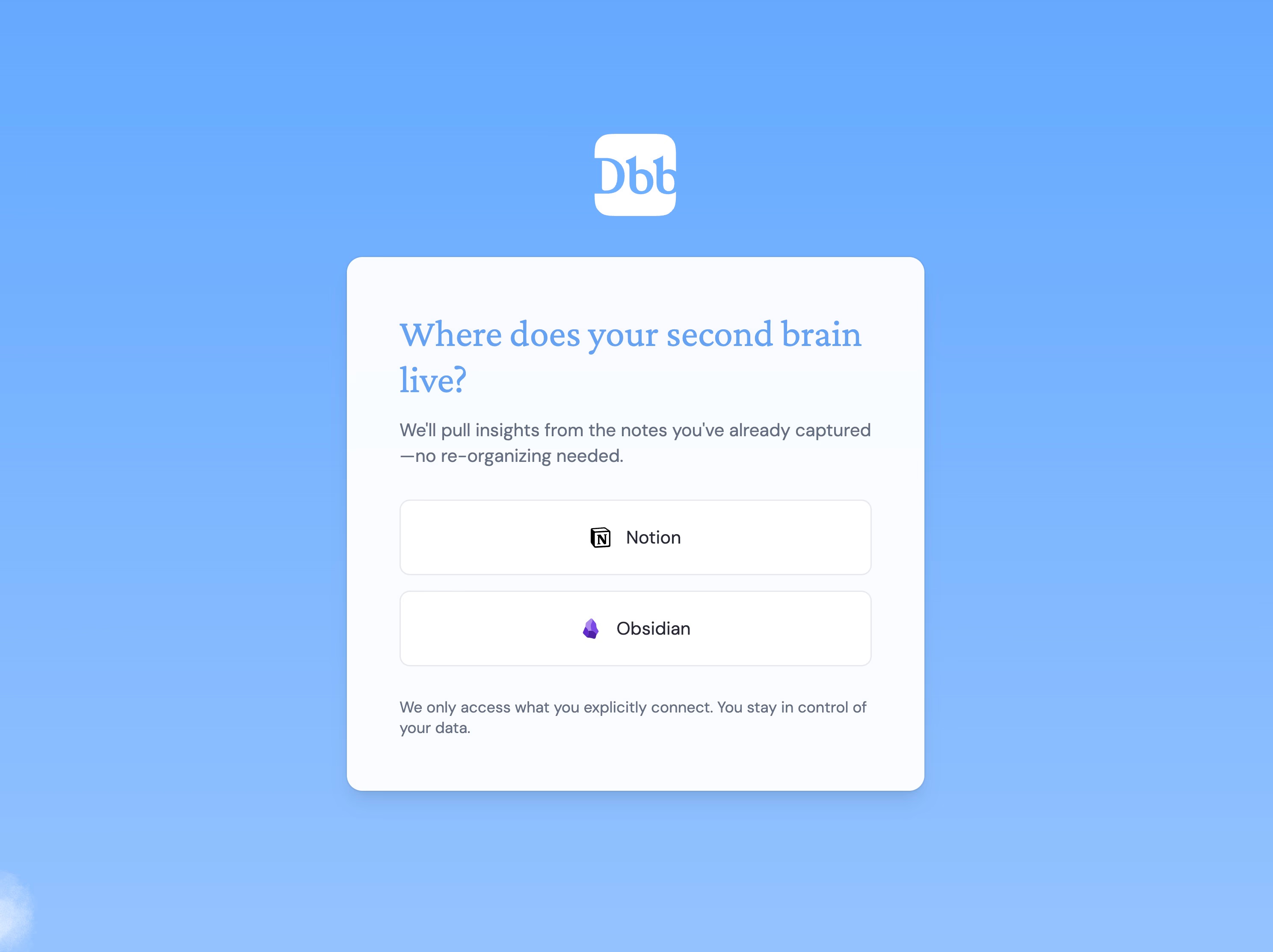
Notion is selected as the source for the notes.
- Connect the Notion workspace and grant access.
- Pick the databases that should provide notes.
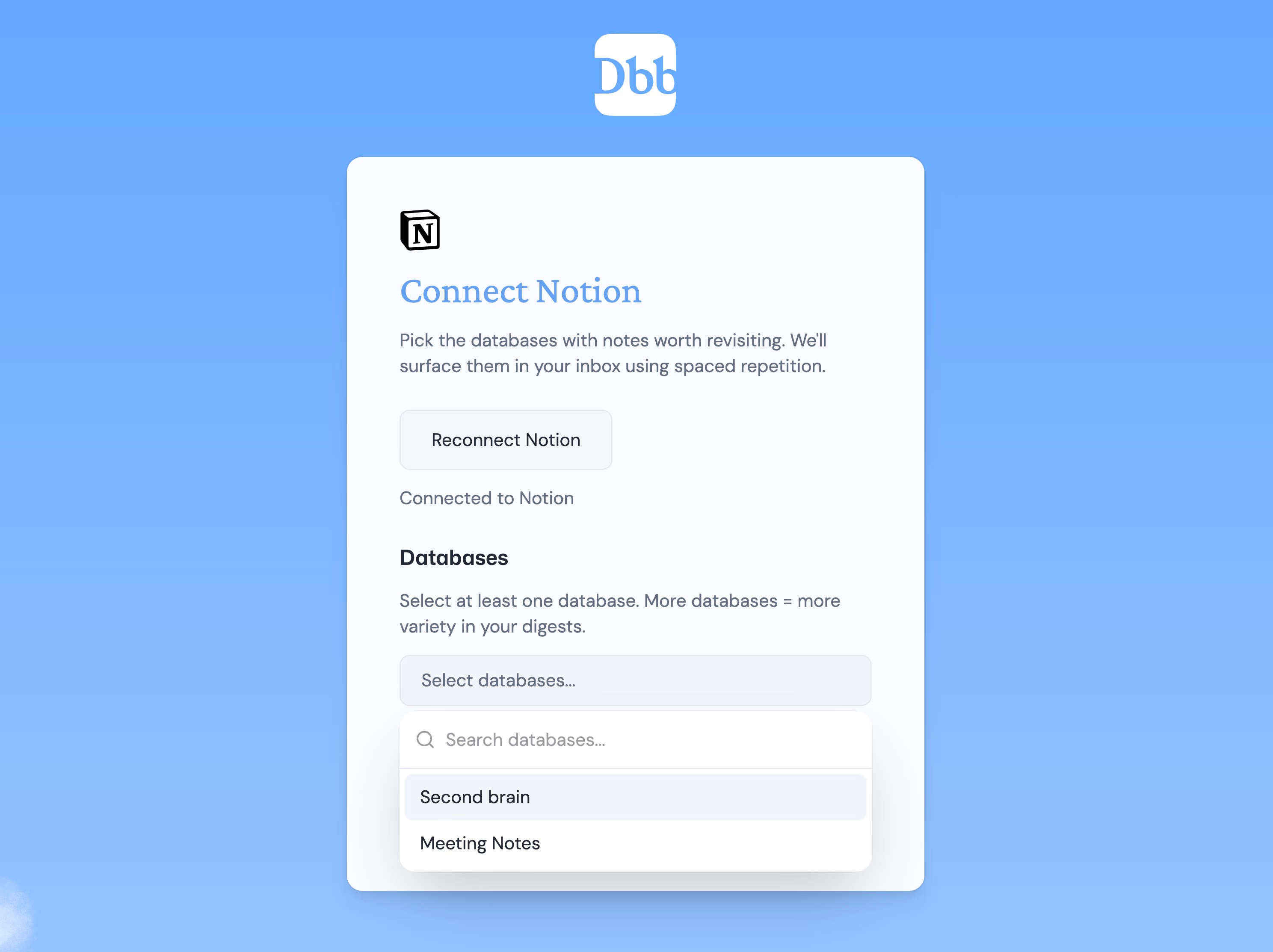
Specific Notion databases can be chosen for resurfacing.
- Wait for the import to finish.
- Set the preferred email frequency and number of notes per send.
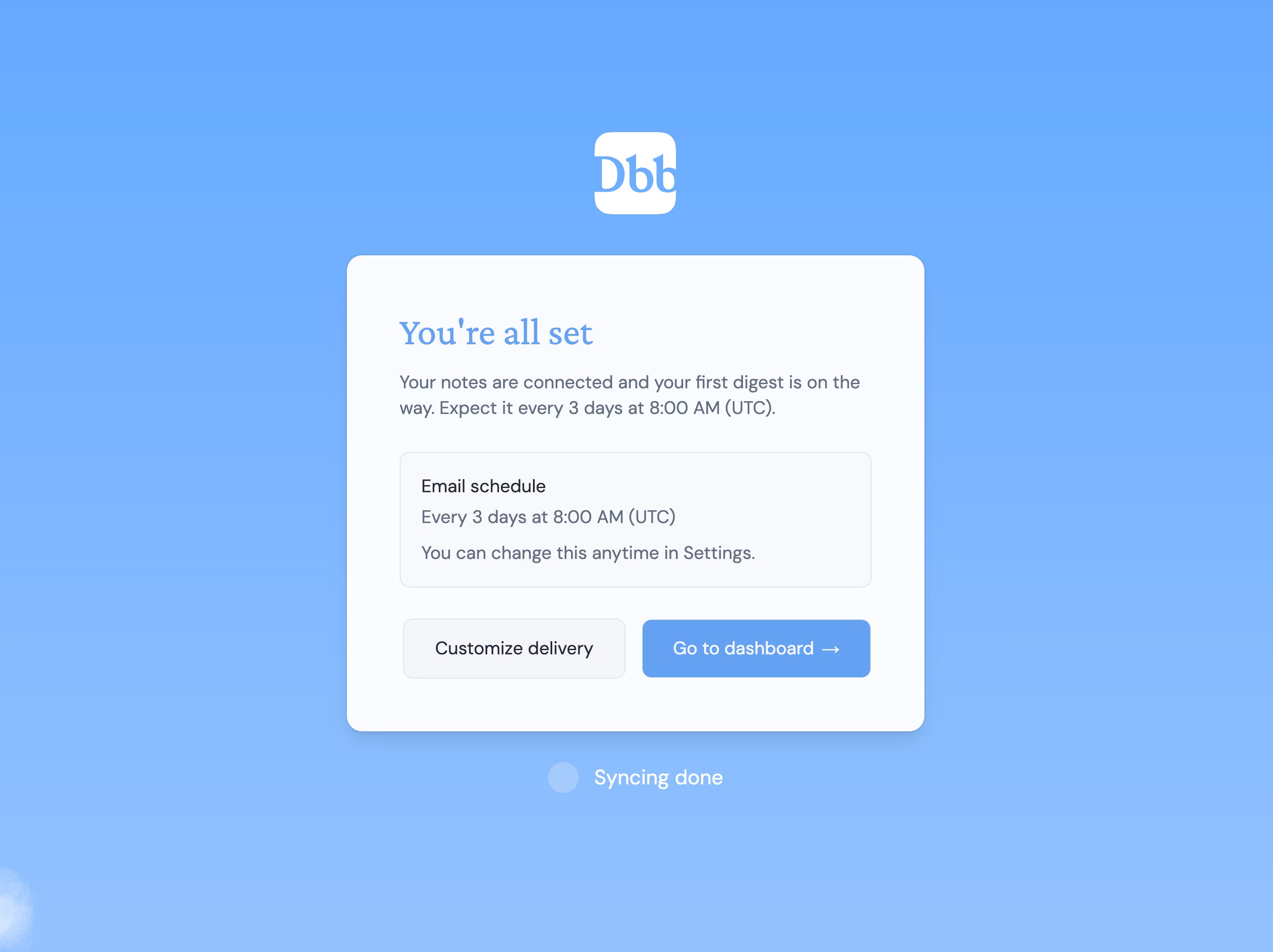
Remember on a schedule, not by accident
Spaced repetition combines a scheduling habit with a recall habit. Flashcards are especially effective for atomic facts, languages, and exam material. Personal notes need a resurfacing loop, or even a carefully organized archive can go stale.
The next action is small: select about 10 useful items today and schedule the first review on a calendar or in an inbox. Once the habit is established, the schedule can become more adaptive, the prompts more precise, and the knowledge base easier to use when it matters.
Frequently asked questions
Does spaced repetition work?
Yes. Spaced repetition improves long-term retention compared with massed practice, particularly when information needs to remain available after a delay. Its strongest results come from combining separated reviews with genuine retrieval and feedback.
What is the best schedule?
There is no universal calendar. The lag between reviews should scale with how long the memory needs to last. As the number of items grows, adaptive flashcard tools such as Anki, RemNote, and FSRS generally outperform a fixed 2-3-5-7 schedule because they adjust intervals to recall performance. Daily Brain Bits is a note-resurfacing tool, not an adaptive per-item interval algorithm.
What is 2/3/5/7 spaced repetition?
It is a simple manual plan that reviews an item after 2, 3, 5, and 7 days. It is easy to follow but does not adjust to item difficulty; the earlier schedules section covers its uses and limitations.
Does it work for ADHD?
Retrieval practice can help when the review procedure is externally structured. The harder part may be self-starting, so an app or email can automate the prompt and short sessions can reduce activation costs. Spaced repetition is not an ADHD treatment.
